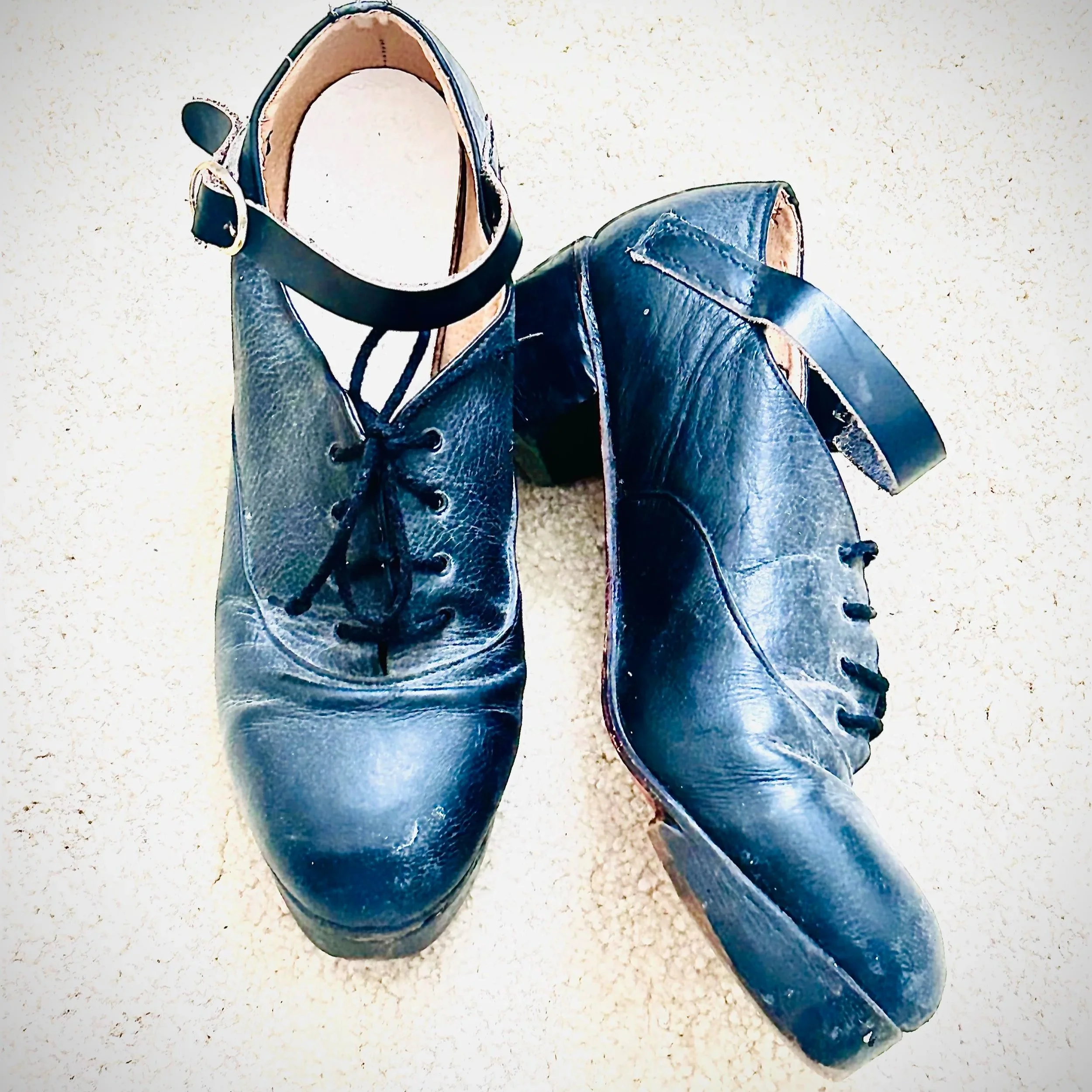
Irish Dancer
“Come back to Erin, Mavourneen, Mavourneen,
Come back, Aroon, to the land of thy birth” - Claribel, 1866
White, educated and Christian. I was the epitome of cultural diversity in the small northern Kentucky town where I grew up. The daughter of an Irish emigrant, I looked the part of a nice middle class American kid. But many cultural nuances distinguished me from others.
Instead of parties my parents threw hooleys. They stuffed my lunchbox full of brown soda bread, and priests regularly came over to say Mass in our basement. While other kids took annual trips to Florida to visit Mickey, every several years my parents took me to Ireland to visit family. On St. Patrick’s Day most people wore Kiss Me I’m Irish pins to school, while I had real traditional shamrocks stuck to my sweater. Kids pointed, laughed and asked me why I was wearing weeds.
My neighbors and classmates. who had local familial roots dating back generations, always made sure to remind me that I didn’t belong. They teased me over everything from my mom’s accent to my quaint sayings. And my name certainly didn’t help me to fit in. Teachers and so-called friends mispronounced it, laughed at it, or even worse, reduced it to nicknames like Maureen or Mo - nothing nearly as darling as Mavourneen.
During those formative years I always preferred to be at home, safely tucked away from the crowd. The rich tapestry of Ireland’s culture filled my house through my mother’s stories about the farm she grew up on, cosy heirloom sweaters and traditional music. I’d merrily twirl around the kitchen table to Johnny McEvoy’s ditty Mursheen Durkin. But I was always stopped short when the tears flowed down my homesick mother’s cheeks. Confusion overwhelmed my young spirit as she’d switch the record to Claribel’s song. The lyrics (“Come back to Erin, Mavourneen, Mavourneen”) urged an Irish emigrant to return home. Popular verses about shamrocks, Killarney, and a longing for the homeland left me feeling torn between two countries, without a secure sense of identity. Was Ireland a happy place or one worth crying over?
I was nine years old the first time my parents took me to Ireland. We arrived in June to bitter cold rain and gale-force winds. The family farm had been sold, my grandparents were dead, and the tension was thick. But somewhere in the midst of hearty meals, jaunty accordion tunes, and the lush countryside, my spirit filled with a sense of love and belonging. I was home.
When I was twelve, my mom signed me up for Irish dance lessons. We had to drive about ten minutes over the river into Cincinnati, Ohio - a world away from my parochial small town. Twice a week I crossed into this magical world where I clicked my heels and soared through the air to jigs and reels. My new friends all had traditional names and parents from Ireland too. Together, we danced to familiar music, laughed until our stomachs hurt and had great craic.
After a year of lessons my parents invested in a traditional Irish dance costume for me. It cost $500, which I knew was a dear price for them at the time, and I understood that they saw something special in me. Not natural talent … but a growing sense of confidence as I finally fit in.
My dance costume had a bright blue base that perfectly snatched my little waist. Intricate hand-embroidery of green and white Celtic knots adorned the bodice and flared skirt, symbolizing the interconnectedness of life. I’d slip my feet into white poodle socks and lace up my black shoes - soft ones if I was doing a slip jig, and hard ones if I’d be stomping out a powerful percussive beat. A head full of tight curls topped off my look and every time I got dressed for a practice, a feis or a performance, I felt beautiful, proud and excited.
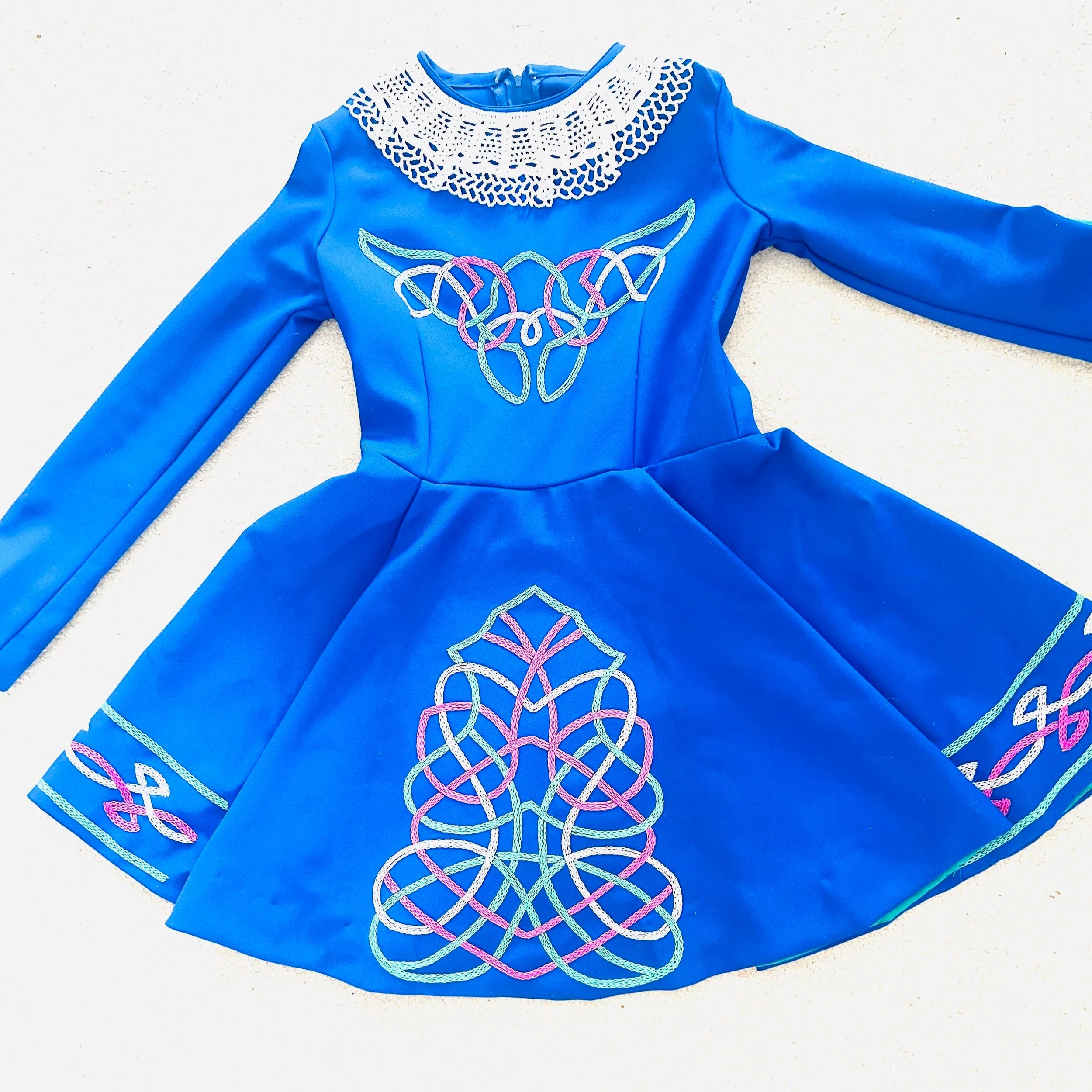
I was also tied in knots. A persistent fear that someone from my school might see me, learn of my secret, and tease me for daring to express my individuality dampened my happy spirit. This was the late 1980s and Riverdance wasn’t a thing yet. If discovered, Irish dancing would just be one more thing that set me apart from others and make me a target of bullying.
Still, I learned how to compartmentalize my anxiety and I kept dancing. Upper body stiff, on the balls of my feet, I glided across the floor and leaped through the air as my tight curls swung around. I competed at feiseanna, performed at the Saint Patrick’s Day parade and showcased my talent at Cincinnati’s Music Hall.
Confidence soaring, in my early twenties I finally responded to the call of Claribel’s chorus (“Come back to Erin, Mavourneen, Mavourneen”). I moved back to Erin. It was 2001, and I arrived in Dublin to study medicine at Trinity College. Clad in Irish knits, I navigated the foreign streets and excelled in my studies. But when a classmate ribbed that I’d fit in better if I didn’t dress like such a tourist, my sense of belonging started to unravel.
Patching together my two selves (Irish and American) proved to be a more intricate dance that I had anticipated. Nevertheless, I embraced my Irish heritage and even taught myself how to knit. Seizing upon the Celtic Tiger I rented a stall at Cow’s Lane Market in Temple Bar and launched Mavourneen Knits. With darling scarves, I developed a successful creative outlet and a means to pay my rent! Most importantly, through a community of artisans, I had finally found a deeper sense of belonging.
Several years later, I moved back to the States a completely transformed person - curious, open and extremely confident. I built a successful career in psychiatry, taught at Harvard Medical School, and kept on creating as an artist through fashion, painting and writing.
Now in my forties, wanderlust has taken me across the world. I write about my adventures while I embrace my identity - sewn together as an Irish-American. I am part of the Irish diaspora - the millions of dispersed Irish. Fortunately, I no longer need to dress in a costume to connect with my heritage or sense of belonging.